Saturday, March 11, 2017

Tonight's Movies: The Mad Game (1933) and 365 Nights in Hollywood (1934) at the UCLA Festival of Preservation

It was another great day at the 2017 UCLA Festival of Preservation, with some very diverse titles on the menu.

I began with an afternoon double bill of Spencer Tracy and Claire Trevor in the pre-Code crime drama THE MAD GAME (1933), followed by Alice Faye and James Dunn in the musical comedy 365 NIGHTS IN HOLLYWOOD (1934). Both films were released by Fox.

I have to laugh, as ever since admitting I'm not much of a Spencer Tracy fan in January, I think I've seen more of his films than any other actor this year! I've averaged a Tracy film every other week in the first ten weeks of the year; links for my other Tracy reviews may be found in my write-up of CASS TIMBERLANE (1947).

It was Claire Trevor who pulled me in, as well as the prospect of an unseen Alice Faye film on the other half of the double bill. And as it happened, THE MAD GAME was a terrifically entertaining film which was the highlight of my viewing day.

Tracy plays Ed Carson, who's made a fortune as a bootlegger. But times are changing for Ed. Prohibition is ending, and he's surrounded by a crowd of disloyal people including righthand man Chopper (J. Carrol Naish), girlfriend Marilyn (Kathleen Burke), and attorney William Bennett (John Miljan).

Ed's attorney Bennett suggests he plead guilty to a tax case, assuring Ed he'll buy the judge off, but he plans to pocket the payoff money himself so he can run off with Marilyn -- and besides, Judge Penfield (Ralph Morgan) can't be corrupted.

Jail does Ed good; he takes up gardening on the prison grounds and eventually volunteers to undergo plastic surgery to change his appearance so he can infiltrate Chopper's gang and bring him to justice. Chopper has gone into the "snatch" (kidnapping for ransom) business, and his latest targets are Judge Penfield's son (Howard Lally) and new daughter-in-law (Mary Mason).

The only people Ed can rely on are Jane (Trevor), a savvy crime reporter who has a soft spot for him, and his loyal pal Butts McGee (Matt McHugh).

Sure, the whole thing got a little crazy around the time Tracy's character went the plastic surgery route, but it was a fast-paced and entertaining 73 minutes. There were some nice set pieces, such as the attempt to spring Ed from the train taking him to prison, which turns out to be a plan by Chopper to rub him out.

The movie was efficiently filmed, which added to the good pacing; for instance, we see a car following the Penfield newlyweds but we don't actually have to see them kidnapped. The story just moves right along and lets the viewer fill in the blanks.

Trevor was 23 here, but as lively and self-assured as in her later work. I believe this was the youngest I've ever seen her on film; before that the earliest Trevor film I've seen was CAREER WOMAN (1936).
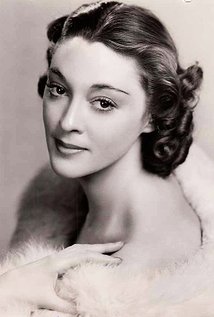
I was also particularly impressed with Kathleen Burke, seen at left, who was quite striking as Tracy's disloyal girlfriend. Her last movie was in 1938. I'm surprised she didn't make more films, as she was memorable in a slinky Gail Patrick sort of way.

Matt McHugh, the actor playing Tracy's pal, looked and sounded very much like Frank McHugh, yet clearly was not him, so I guessed it must be his brother. Correct! Matt McHugh was four years older than Frank, and he actually had more screen credits than his better-known brother, appearing in over 220 films.

This seems to have been the movie for older brothers of better-known actors named Frank, as Ralph Morgan, who played the judge, was the sibling of the Wizard of Oz himself, Frank Morgan. And like Matt McHugh, Ralph Morgan had more screen credits than his brother Frank!

THE MAD GAME was directed by Irving Cummings and filmed by Arthur C. Miller.

The second film of the day, 365 NIGHTS IN HOLLYWOOD, was less successful, though still worthwhile in order to see the young Alice Faye in her fourth film -- when she was more of a platinum "Jean Harlow" type and not the blonde, self-assured Alice we better remember.

The plot of this 77-minute film is a bunch of silliness about a movie director, Jimmy Dale (James Dunn), who quickly hit the big time and then fell far fast; he's now relegated to teaching drama in a school owned by J. Walter Delmar (Grant Mitchell), which exists chiefly to take money from gullible Hollywood wannabes.

When Alice Perkins (Faye) of Peoria shows up at the school, she's got more talent than most, and an admirer (Frank Melton) at the drive-in where she's a carhop wants to spend an inheritance to produce a movie with Alice as the star. Soon Jimmy is directing Alice and the drama school's only well-known graduate, Adrian Almont (John Bradford), in a new film.

The movie was inspired by stories by a columnist named Jimmy Starr, but while the title's great, the plot left a lot to be desired. It's best when Faye is on screen, but it's admittedly hard to know at times what was real and what was acting when it came to her occasionally awkward screen appearance.

Faye's performance does seem to grow more confident as the film goes on, so I suspect some of the awkwardness was simply her portrayal of the naive girl from Peoria, but this is definitely not the seasoned Alice Faye of favorite Fox musicals like WEEK-END IN HAVANA (1941) and THAT NIGHT IN RIO (1941) -- or even ON THE AVENUE (1937). It was interesting to see her in it, though, to better understand the trajectory of her career.

The supporting cast includes John Qualen, Frank Mitchell, and Jack Durant. I wish I'd known in advance to be watching for Dennis O'Keefe and Lynn Bari in the chorus!

365 NIGHTS IN HOLLYWOOD was directed by George Marshall and filmed by Harry Jackson.

After a dinner break I returned to the Billy Wilder Theater for a program of Classic Animated Shorts From Paramount.

Over the course of an hour or so we watched half a dozen fascinating cartoons, mostly from Max Fleischer, beginning with DINAH (1933), a "Screen Song" short starring the Mills Bros., with some laugh-out-loud funny animation; HONEST LOVE AND TRUE (1938), a long-lost Betty Boop short which was fun despite missing its soundtrack; EDUCATED FISH (1937), a fun story about a wayward young fish, in Technicolor; the remarkable George Pal Puppetoon RHYTHM IN THE RANKS (1941), in dazzling color; A CARTOON TRAVESTY OF THE RAVEN (1942), a takeoff on the Poe story with the raven as a vacuum cleaner salesman; and RAGGEDY ANN AND ANDY (1940).

Seeing the Mills Brothers on screen was a particular thrill, as I really enjoy them, and I was also especially happy to see RAGGEDY ANN AND ANDY; a Raggedy Ann doll has always been one of my treasured possessions, and some older Raggedy Ann books were childhood favorites.

Kudos to UCLA for pulling together such varied and interesting programming for the festival!

I'll be returning to the festival next weekend for an evening of the two-color MAMBA (1930) teamed with the black and white musical CHEER UP AND SMILE (1930), in which a small role is played by one Marion Morrison, soon known as John Wayne.

Friday, March 10, 2017

Tonight's Movie: Open Secret (1948) at the UCLA Festival of Preservation

Film noir was the theme of the evening Friday at the UCLA Festival of Preservation.

Alan K. Rode of the Film Noir Foundation was on hand to introduce a double bill of two films from 1948, HE WALKED BY NIGHT (1948) and OPEN SECRET (1948).

I don't think I could ever tire of HE WALKED BY NIGHT, which I last saw in 2014 as part of UCLA's Anthony Mann series.

Scott Brady and Roy Roberts (seen below right), are on the trail of killer Richard Basehart, aided by Jack Webb as a criminologist. The film helped set the style for decades of police procedurals to come, including hugely influencing Webb's own DRAGNET.

A fun bit of trivia I learned tonight: Basehart's dog in this film was also seen as "Rembrandt" in WOMAN ON THE RUN (1950).

The cinematography by John Alton is thrilling; shots of the police flashlights as the cops race through L.A.'s underground storm drains have the power to give me goosebumps even after several viewings. At the time it was made this Eagle-Lion film may have been seen as just another movie to fill a theater schedule, but it has scenes which are, quite simply, great art.

The night's second film, OPEN SECRET, was considered a "lost" noir which has only been available via poor public domain DVDs. The restored 35mm print was excellent.

Rode related an amazing coincidence which he learned from his brother in recent years: The director of OPEN SECRET, John Reinhardt, had come to America from Europe on the same boat with his grandfather Alfonse; the two men then traveled cross-country to California, and there is a photo of them together at the Grand Canyon!

Reinhardt also directed HIGH TIDE (1947), which I saw at the 2013 Festival of Preservation, and THE GUILTY (1947), seen at the festival in 2015.

OPEN SECRET stars John Ireland and Jane Randolph as Paul and Nancy Lester, newlyweds who stumble into a hotbed of anti-Semitism when they interrupt their honeymoon trip to visit Paul's old army pal.

The Lesters are let into the friend's apartment by his landlady (Anne O'Neal), but he never shows up, and scary things start happening, like things going missing from the apartment...and then the friend's body turns up. Paul and Nancy solve the mystery with the help of Sgt. Frontelli (Sheldon Leonard) and a Jewish camera shop owner, Harry (George Tyne).

This was an interesting little movie, not least because Ireland and Randolph, as the loving newlyweds, play characters so different from the crooks they portrayed in the previous year's RAILROADED! (1947). They're an appealing team as the good guys in this one.

There seemed to be a brief blip of missing footage when Sgt. Frontelli meets Paul, as they're suddenly on a sofa talking, but that was the only issue with the print.  Just as with Ireland and Randolph, it was great seeing Leonard as a good guy. He has the best line in the film, wrapping things up saying "He was playing Hitler -- but in the wrong precinct." There was appreciative chuckling among the audience when he said that. You don't mess with Sheldon Leonard!

I liked that O'Neal's nosy landlady wasn't a one-note character, being genuinely helpful and kind, and her being hard of hearing added an interesting touch to her attempts to do a bit of snooping on her tenant.

While the villains may have been a bit overdone -- for the most part they are all very, very bad, with no shadings to differentiate the characters -- all in all it was an absorbing 68 minutes which I enjoyed. Other than a word seen in a photograph, the terminology may have been soft-pedaled (for easier marketing, we were told), but like CROSSFIRE (1947) the previous year, it boldly addresses discrimination and the evil that men do.

OPEN SECRET was filmed by George Robinson. The supporting cast includes Roman Bohnen, Arthur O'Connell, Rory Mallinson, Morgan Farley, and Ellen Lowe.

Next up for me at the festival: Saturday afternoon seeing the double bill of Spencer Tracy and Claire Trevor in THE MAD GAME (1933) followed by Alice Faye and James Dunn in 365 NIGHTS IN HOLLYWOOD (1934). Then, after a dinner break, an evening of classic animated Paramount shorts!

Tuesday, March 07, 2017

Tonight's Movie: Yellow Dust (1936)

Last week I watched Richard Dix in THE ARIZONIAN (1935), and I enjoyed it so much I wanted to follow up with another Dix Western in short order. That movie was YELLOW DUST (1936), released a year after THE ARIZONIAN.

In YELLOW DUST Dix plays college-educated Bob Culpepper, who goes west and saves the life of a prospector named Solitary (Andy Clyde). While burying the man who tried to kill Solitary, Bob and Solitary strike gold.

Bob and Solitary become partners and while heading to town to stake their claim, they interrupt a stagecoach robbery. Bob falls head over heels for one of the passengers, Nellie (Leila Hyams, THE BIG BROADCAST). Nellie has been hired to sing in a saloon owned by Jack Hanway (Onslow Stevens).

Hanway tries to take over both Bob's claim and his girl, but he's thwarted not only by Bob, Nellie, and Solitary, but by one of his own henchmen, Missouri (Moroni Olsen), who develops an unlikely understanding with Bob and helps him at a couple of key moments.

I found this briskly paced little 69-minute Western most enjoyable. It's more lighthearted than the typical Dix vehicle, with nice splashes of humor along with the Western action. He has some very nice extended scenes with Hyams, as Bob and Nellie's relationship develops, and there's also a terrific comedic character turn by Olsen.

There's a scene with Dix and Olsen locked up in jail where Dix explains all the reasons why his character is, to use a modern phrase, "stressed out," which is quite funny. All in all I very much enjoyed this one.

YELLOW DUST was directed by Wallace Fox and filmed by Edward Cronjager. Exteriors were filmed in Sonora, California.

YELLOW DUST isn't available on DVD or VHS. It's an RKO film which will hopefully be released on DVD at some point by the Warner Archive.

In the meantime, it can be seen from time to time on Turner Classic Movies. The trailer is available at the TCM website.

Previous reviews of Richard Dix films: THE PUBLIC DEFENDER (1931), HELL'S HIGHWAY (1932), ROAR OF THE DRAGON (1932), THE ARIZONIAN (1935), SPECIAL INVESTIGATOR (1936), IT HAPPENED IN HOLLYWOOD (1937), BLIND ALIBI (1938), SKY GIANT (1938), TWELVE CROWDED HOURS (1939), MEN AGAINST THE SKY (1940), THE ROUNDUP (1941), TOMBSTONE: THE TOWN TOO TOUGH TO DIE (1942), and THE KANSAN (1943).

Monday, March 06, 2017

Farewell to Robert Osborne

This is a sad, sad day for all of us who love classic movies.


From TCM:


There is also a TCM Remembers video tribute.

Here is the news of Robert Osborne's passing as reported in Variety and The Hollywood Reporter.

I'm so grateful to have met this lovely man and had him sign a pass and DVD for me, in 2013 and 2014, respectively.


The sad news is not necessarily a surprise, as TCM fans were aware to some extent that he has been unwell, and as time went on it seemed increasingly unlikely he would return to the network. Nonetheless, it's quite a blow for all of us who love TCM and admired Mr. Osborne deeply. Whether or not one had the chance to meet him personally, he felt like a friend to all of us who loved classic movies.

Robert Osborne educated, entertained, and brought happiness to so many of us. Thank you, Mr. Osborne, for everything.

Update: A tribute by TCM's Ben Mankiewicz in The Hollywood Reporter.

Eddie Muller, host of TCM's new Sunday morning series "Noir Alley," has also posted a remembrance.

Update: So many wonderful tributes today! Here are more, from Eva Marie Saint, Angela Lansbury, Scott Eyman, Leonard Maltin, and my friend Jessica at her blog Comet Over Hollywood. These are just a handful of the many lovely things posted and Tweeted today.

And TCM's Scott McGee noted the wonderful coincidence of a movie starring Robert Osborne's dear friend Olivia de Havilland airing in prime time on the day of his passing: "Bittersweet perfection."

Tuesday Update: Here are additional tributes from Robert Wagner, Mitzi Gaynor, Lou Lumenick, Cliff at Immortal Ephemera, and Raquel at Out of the Past.

Update: TCM has announced plans for a 48-hour tribute to Robert Osborne on March 18th and 19th.

Sunday, March 05, 2017

All About Eve (1950): A Photo Gallery

This afternoon I went to a Fathom Events/TCM screening of ALL ABOUT EVE (1950) at my favorite local theater.

Every time I watch this movie it hits me anew how truly great it is. Every inch of it is perfection; the performances, the Joseph L. Mankiewicz dialogue -- and that fabulous Edith Head party dress! -- remain fresh and interesting after multiple viewings. I had a thoroughly grand time revisiting it today.

The movie has a dream cast. I think Margo Channing must be my all-time favorite Bette Davis performance; despite Margo's affectations, the character feels very real and true in a way that not all of Davis's interesting yet theatrical characters do. I find this rather notable in that she's playing a diva of an actress!

I especially like Margo and Bill's (Gary Merrill) mature, adult relationship, which doesn't feel quite like other screen romances of the era. Merrill's unhesitating turn-down of Eve's come-on, plus his dash to Margo's side after Addison's nasty article, both make him a true hero in my book.

Merrill and Davis married the year this film was released, but sadly they split after a decade of marriage.

Add in a cast with Anne Baxter, Celeste Holm, Thelma Ritter, Hugh Marlowe, Marilyn Monroe, and Oscar-winning George Sanders, all at the top of their games, and you've got a slice of movie heaven.

I wrote about the movie very briefly back in 2006, just a few months after this blog started up. There weren't any illustrations to that post, so I thought I'd share a gallery of stills tonight to celebrate this marvelous film.


ALL ABOUT EVE is most highly recommended. It's available on DVD, Blu-ray, VHS, and Amazon Instant Video.

Tonight's Movies: Good References (1920) and The Poor Nut (1927) at the UCLA Festival of Preservation

After a great opening night Friday, it was back to the Billy Wilder Theater Saturday afternoon for the next screening in the UCLA Festival of Preservation.

The double bill consisted of a pair of silents, GOOD REFERENCES (1920), starring Constance Talmadge, and THE POOR NUT (1927), with Jack Mulhall and Jean Arthur.

The program began with a pair of 35mm shorts, TRAMP STRATEGY (1911) and PEGGY, BEHAVE! (1922).

TRAMP STRATEGY, a 12-minute short directed by Alice Guy, was of interest as it was over a century old; bits of it were scarcely visible, but on the whole the print was watchable. A goofy little comic piece about a couple trying to convince the girl's father to let them marry, it was hampered by a pair of unattractive male leads. The "tramp" had so much facial hair he looked more like a werewolf!

The print of the eight-minute-long PEGGY, BEHAVE! was incomplete, but what was there was charming. I'd never seen a Baby Peggy short before; she was quite young, probably a little over three when this was filmed, but her reactions to different scenarios were delightful. There was a priceless bit of pantomiming where Peggy pretends to wash a window, to dupe her mother into not realizing it's broken!

Both features were likewise in 35mm; it was emphasized in the introduction that while digital has its place, especially for accessibility, it's properly stored film which will ensure longevity for centuries. The long-term security of digitally stored films is unknown.

One of the most interesting things about the GOOD REFERENCES restoration was that only Czech intertitles survive. They were translated back into English, with slang and other wordings carefully chosen to fit the various characters' social positions, and new intertitles were then created imitating the style of other films from the studio, First National Pictures.

In GOOD REFERENCES Constance Talmadge plays the orphaned Mary Wayne, who's having trouble finding employment due to a lack of good references. She impersonates an ill woman (Mona Liza) in order to land a job as social secretary to a wealthy woman, Mrs. Marshall (Nellie Spaulding).

When Mrs. Marshall introduces her nephew (Vincent Coleman) to society, he constantly causes Mary problems due to his unsavory friends, including a boxer (Matthew Betts).

I found the story continuity of this 60-minute film a bit hard to follow at times, as others sitting around me also commented at intermission; I suspect we were missing bits here and there. That said, Talmadge was charming and I enjoyed the chance to see her on film; it was mentioned she may not be as well remembered as her sister Norma due to relatively few of her films surviving.

GOOD REFERENCES was directed by Roy William Neill and filmed by Oliver T. Marsh. Prominent in the supporting cast is Ned Sparks, who I always find amusing in his '30s films.

The highlight of the day was THE POOR NUT, with a young Jean Arthur and Paul Kelly in the cast. Kelly has a large role, but the film was released just after he was sent to prison for manslaughter, so his name was removed from the credits. He was out of films until 1932. You can learn more about Kelly's life from Kristina at Speakeasy.

THE POOR NUT is in the same "awkward college hero" vein as Harold Lloyd's THE FRESHMAN (1925) and Buster Keaton's COLLEGE (1927).

Jack Mulhall plays John Miller, a botany student who sees a photo of Julia Winters (Jane Winton), "queen" of a rival college, and begins corresponding with her. Unfortunately the nerdy John tells her he's "Jack," a fraternity man and star athlete, which couldn't be further from the truth.

When Julia's boyfriend Spike (Kelly) goes to a track meet at John's school, Julia tags along to see if John might be a better romantic option.

Warned that Julia is on the way, John seeks help from a kindly sports trainer, and it turns out he's actually good enough to make the track team!

Meanwhile fellow botany student Margie (Arthur), who likes John just as he is, takes a job alongside him in the bookstore.

I found this one a lot of fun, and I particularly liked that glamorous Julia ends up being a bit unpredictable. When she meets John, rather than being angry she puts her psychology studies to work trying to figure him out.

Julia's also quite bossy, though, and all wrong for John...while the quieter Margie pines for him. Arthur was 26 when this was released, and it's no surprise to her many fans that she's charming.

I was curious about the campus locations seen in the movie; the film was set in Arizona, and according to IMDb, the movie was shot at the University of Arizona at Tucson.

THE POOR NUT was directed by Richard Wallace and filmed by David Kesson. It runs 70 minutes.

I anticipate returning to the festival next Friday evening for a double bill of HE WALKED BY NIGHT (1948) and the little-known noir OPEN SECRET (1948).

Saturday, March 04, 2017

Tonight's Movie: I Take This Woman (1931) at the UCLA Festival of Preservation

Last night the 2017 UCLA Festival of Preservation celebrated a wonderful opening night.

The festival kicked off with a sold-out double bill of the Ernst Lubitsch classic TROUBLE IN PARADISE (1932) and the long-lost I TAKE THIS WOMAN (1931), an early starring vehicle for Gary Cooper and Carole Lombard.

The evening began with the surviving fragments of an oddball short, VOICE OF HOLLYWOOD (1931), unseen by audiences since the year of its release. The format is a faux radio show, with Walter Huston singing, Bela Lugosi discussing performing scary roles, and Jean Harlow answering questions from fans. As was noted in the introduction, it was particularly appropriate to screen that short on March 3rd as it was Harlow's birthday.

TROUBLE IN PARADISE and I TAKE THIS WOMAN were both screened in 35mm. I hadn't seen TROUBLE IN PARADISE for a number of years, and it was my first opportunity to see it on a big screen. Needless to say, it was wonderful enjoying this lighter-than-air comedy with an audience! I appreciated it more than ever; a true must-see film.

We had the privilege of being the first U.S. theater audience to see I TAKE THIS WOMAN since the year of its release!

I TAKE THIS WOMAN was based on the story "Lost Ecstasy" by Mary Roberts Rinehart. Rinehart, in fact, was responsible for the film being unseen for so long; at one point the story and film rights reverted to her, as was apparently common in the era, and she kept a 16mm print and tossed out the 35mm negative.

The film was originally intended to star Nancy Carroll, but Paramount instead decided to use it to help develop Lombard into a star. Lombard plays Kay Dowling, a spoiled, headstrong wealthy Easterner who is banished to the family ranching property in Wyoming following her latest escapades.

Bored Kay decides to make quiet cowboy Tom McNair (Cooper) fall in love with her, but she's caught in her own trap and falls in love with him as well. Tom and Kay marry, despite Kay's father disowning her over it, and they go to live in a one-room house on the cattle ranch Tom hopes to build up.

The house is shabby and desolate, and with its uninsulated walls, it looks believably freezing in the middle of the snowy winter, when they must share their living space (and its big fireplace) with an orphaned calf in order to keep it alive.

Tom and Kay genuinely love each other, with a Christmas sequence being a touching standout, as they lovingly surprise one another with shabby gifts they can barely afford.

Love is not enough, however, and with the coming of spring Kay retreats to the East and plans a divorce...only to realize that, as tough as the past months had been, they were also filled with meaning and accomplishment. The return to her past frivolous lifestyle of parties and socializing loses its appeal.

I found this a very solid and entertaining film. Though it was introduced as not having particular significance, other than seeing the leads before they were full-blown stars, I found it quite engrossing; it reminded me a bit of the following year's THE PURCHASE PRICE (1932) with Barbara Stanwyck, in which she plays a singer who evades a mobster by becoming the mail order bride of a North Dakota farmer (George Brent).

Even in this early role, Lombard exudes intelligence as she takes her character from glamorous brat to dowdy farm wife weilding a scrub brush and keeping a pot of hot coffee at the ready on the stove. The wacky side so familiar from her comedies peeks through occasionally, such as her reaction in the scene when cowhands present her with a stuffed animal head as a wedding gift.

Cooper was tall and handsome, of course, and I liked that Lombard's Kay couldn't manipulate his steely character. Even as she plans a divorce, he's one step ahead of her. I particularly liked a moment when he shooed away her persistent ex-boyfriend (Lester Vail).

The supporting cast includes Helen Ware, Charles Trowbridge, Clara Blandick, and Syd Saylor.

I TAKE THIS WOMAN was directed by Marion Gering and filmed by Victor Milner. It runs 72 minutes.

Coming next: An account of an afternoon of silent comedies featuring GOOD REFERENCES (1920) and THE POOR NUT (1927).

Thursday, March 02, 2017

TCM in March: Highlights

March is an exciting month on Turner Classic Movies!

The annual 31 Days of Oscar festival comes to an end on Friday, March 3rd, and the regular March schedule begins in earnest on Saturday, March 4th.

March is particularly exciting as the new Noir Alley Sunday morning franchise begins on March 5th. For anyone who missed the news, my post on Noir Alley, hosted by the Film Noir Foundation's Eddie Muller, may be found here. The schedule for the entire year has been posted by TCM here, and here's a terrific video trailer.

Treasures From the Disney Vault, hosted by Leonard Maltin, returns to TCM on March 16th, and there's a fun "March Malice" theme the week of March 20th-25th, with 64 movies showcasing everything from psycho killers to aliens to animals gone bad.

The March Star of the Month is Richard Burton. There will not be a separate Star of the Month post for March.

...The Noir Alley series kicks off on March 4th with Humphrey Bogart in THE MALTESE FALCON (1941). Noir Alley films will air at 7:00 a.m. Pacific Time, 10:00 Eastern. As I recently discussed with friends on Twitter, it seems very "noir" to program this series during what are typical churchgoing hours for some of us! Thanks to DVRs, it's not really an issue, though, other than not being able to participate in live Tweets.

...I'm fond of MGM's RICH MAN, POOR GIRL (1938), showing on March 6th. It stars Robert Young and Ruth Hussey in the title roles, with Lew Ayres and Lana Turner in support.

...A marvelous day of Barbara Stanwyck films on March 7th includes favorites like EAST SIDE, WEST SIDE (1949) and MY REPUTATION (1946).

...TCM features the work of MGM "B" director S. Sylvan Simon on March 9th, with titles including George Murphy, Joan Blondell, and Lana Turner in TWO GIRLS ON BROADWAY (1940) and Margaret O'Brien and Wallace Beery in BAD BASCOMB (1946).

...You can't go wrong with the pre-Code BUREAU OF MISSING PERSONS (1933) on March 10th. The huge cast includes Bette Davis, Pat O'Brien, Lewis Stone, Glenda Farrell, Allen Jenkins, Ruth Donnelly, and Alan Dinehart, plus Jean Muir in a wordless role.

...On March 12th the Noir Alley title is one I've never seen: DETOUR (1945), starring Ann Savage and Tom Neal.

...A day of film noir on March 15th includes one of my all-time favorites, TOO LATE FOR TEARS (1949). It never gets old! Lizabeth Scott, Arthur Kennedy, Dan Duryea, Don DeFore, and Kristine Miller are a terrific ensemble.

...March 16th sees the return of the quarterly Disney evening, Treasures From the Disney Vault, hosted by Leonard Maltin. This month there are numerous TCM premieres including Fred MacMurray in FOLLOW ME, BOYS!( (1966) along with a few animal-themed films, THE HOUND THAT THOUGHT HE WAS A RACCOON (1960), THE INCREDIBLE JOURNEY (1963), CHARLIE, THE LONESOME COUGAR (1967), and NAPOLEON AND SAMANTHA (1972). (Personal memory: I fondly recall going to NAPOLEON AND SAMANTHA with my Grandpa, who took me to many live-action Disney films of that era.) Also on the schedule are several cartoons and the nature film JUNGLE CAT (1959)! It's a great Disney lineup, as always.

...St. Patrick's Day features an impressive lineup of a dozen Irish-themed films, including IRENE (1940), THREE CHEERS FOR THE IRISH (1940), FINIAN'S RAINBOW (1968), ODD MAN OUT (1947), THE QUIET MAN (1952), and LITTLE NELLIE KELLY (1940). Priscilla Lane and Dennis Morgan are seen at the left in THREE CHEERS FOR THE IRISH, a personal favorite of mine.

...The third Noir Alley film for March is ACT OF VIOLENCE (1948), starring Robert Ryan, Van Heflin, Janet Leigh, and Mary Astor, directed by Fred Zinnemann. The air date is March 19th.

...Later on the 19th check out the delightful Ernst Lubitsch film CLUNY BROWN (1946), starring Jennifer Jones and Charles Boyer. Then stick around for the second half of a Lubitsch double feature, as Claudette Colbert and Gary Cooper star in BLUEBEARD'S EIGHTH WIFE (1938).

...The 19th just keeps getting better, following the Lubitsch films with a trio of movies directed by Yasujiro Ozu: TOKYO CHORUS (1931), I WAS BORN, BUT... (1932), and GOOD MORNING (1957).

...It's been over a decade since I last watched ALL ABOUT EVE (1950). If I have time I plan to attend a Fathom Events/TCM screening this Sunday, March 5th. For anyone who can't catch it in a theater, it plays on TCM March 21st.

...Last June I enjoyed revisiting KEY LARGO (1948) for the first time in many years. It's on March 23rd. Bogart, Bacall, and Robinson star.

...The final Noir Alley movie for March is the terrific TENSION (1949), starring Richard Basehart, Audrey Totter, Barry Sullivan, and Cyd Charisse. It airs on March 26th.

...March 27th features a very well-deserved prime time tribute to Kathryn Grayson, featuring a terrific lineup of MGM musicals: KISS ME KATE (1953), ANCHORS AWEIGH (1945), SHOW BOAT (1951), THAT MIDNIGHT KISS (1949), and TWO SISTERS FROM BOSTON (1946). Seen at left: Grayson with Ava Gardner in SHOW BOAT.

...THE ARNELO AFFAIR (1947) is an engrossing MGM crime drama starring John Hodiak, Frances Gifford, George Murphy, and Eve Arden. It's on March 29th.

...March ends in spectacular style with a five-film prime time tribute to the great Dan Duryea on March 31st, featuring the TCM premiere of the rarely seen ANOTHER PART OF THE FOREST (1948). ANOTHER PART OF THE FOREST costars Fredric March, Ann Blyth, and Edmond O'Brien. Also showing that evening: WINCHESTER '73 (1950), in which Duryea has one of the all-time great movie entrances; THE UNDERWORLD STORY (1950) with Gale Storm, which will be shown at this year's TCM Classic Film Festival; SCARLET STREET (1945) with Joan Bennett and Edward G. Robinson; and THE PRIDE OF THE YANKEES starring Gary Cooper.

For more information on TCM in March 2017, please visit the online schedule.

Additionally, check out TCM's March promo reel.

Newer›  ‹Older